
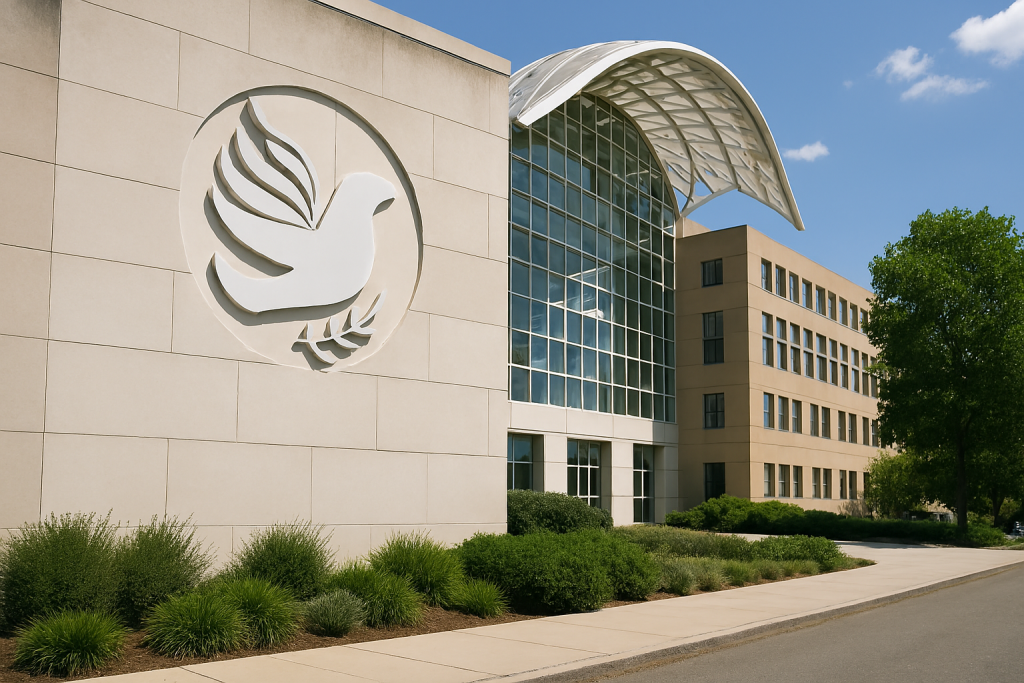
The US Institute of Peace was established in 1984 by Congress. Over the years, its duty has been to serve as a bridge of diplomacy and research, while operating outside the politicized machinery of daily branch power.
In the midst of this, 2025 has been the year that the Donald Trump administration launched a radical transformation as an act that marks a dramatic change from the institute’s founding purpose.
This took place on the 3rd of December 2025, as the US Department of State officially made it public that the institute would henceforth be called, the “Donald J. Trump Institute of Peace”. As such, the president’s name was installed over the building’s facade. This article is aimed at exploring the change.
To Signal a New Foreign Policy Direction: From Institutional Diplomacy to Executive Control
In the process of bringing formerly independent institutions under executive control, renaming the institute is part of a broader and wider effort. This has brought about the effective reconstitution of its identity. One of the deepest reasons is the signaling of a major shift in how foreign policy is handled in the United States. The Trump administration, instead of relying solely on long-established institutions, is moving foreign policy power into the hands of the president himself.
In renaming the institute after Trump, the administration points out that this older institution-based model of diplomacy is not as important as a new, centralized one. This decision makes the move from a diplomacy founded on institutions to a diplomacy founded on one leader’s power, style, and decisions.
To Dismantle or Repurpose Non-Statutory Government Entities
This means that the executive actions were aimed at eliminating or reducing some government components and functions, using USIP as a means of targeting for reduction. The change of name sits within that large program of reorganizing independent agencies. It symbolizes the accompaniment of structural changes (staffing, budget, governance) that alter how the institute works.
To Shift the Definition of Peace Through Strength Vision
This reflects that the administration favours diplomacy, framed around pressure, leverage, etc. The label signals that the US peace policy’s judgment will be based on high-visibility deals and unilateral leverage, not really on long-term prevention and institution building. Traditionally speaking, USIP has promoted conflict prevention, diplomacy, and others. But, what represents a major change in how America interprets the idea of peace through strength philosophy.
To Celebrate Trump’s Role as a Negotiator and Peacemaker
One of the main reasons behind this action is the honouring of what is described as Trump’s exceptional role as a negotiator and global peace maker.
This was done because Trump’s approach to diplomacy is a reflection of a new era that is defined by long bureaucratic negotiations, and by decisive leadership, bold engagement, and high-profile deal-making. These qualities can mostly be achieved through finding inner peace. This is why physiologist always offer advice on finding inner peace, to help individuals or groups achieve proper emotional and mental strength to help in decision-making, especially athletes.
It is this narrative that forms the backbone of the official justification for the rebranding, and the spokespeople of the White House have used it repeatedly, even the State Department and Trump’s closest advisors. For them, the building’s new name is a marker, a permanent reminder of a presidency that argues and remolds the landscape of global conflict resolution. This points to the fact that it is more than honouring achievements. Rather it reflects a deliberate political message. American diplomacy’s identity is reframed around one individual, Donald J Trump.
To Leverage Geopolitical or Economic Opportunities Tied to Diplomatic Opportunities Tied to Diplomatic Initiatives
One of the interpretations of this renaming is the timing that may reflect deeper geopolitical interests that are connected to Diplomatic activities. This, to some extent, suggests and reflects that the remaining could be part of a wider strategy to position the US in advantageous regions, where negotiations, agreements, or peace deals have long-term value, strategically or even economically.
To Score Politics Points Domestically With Supporters and Donors
The renaming with the president’s name is a big win for his political coalition. It signals success, power, and prestige to supporters. Research makes us understand that renaming is both a policy act and a political gesture. It is rarely just ceremonial. It is a loud political act that is used for messaging, fundraising, and power building.
Conclusion
The renaming of the US Institute of Peace was actually a necessary thing for the president to do, because it has brought about a new focus and purpose to the system. Not just about the system, but there has also been a public reference to the fact that the president is actively doing what is required of him, while on duty. This renaming will bring about a recreation and transformation of the US Institute of Peace.